
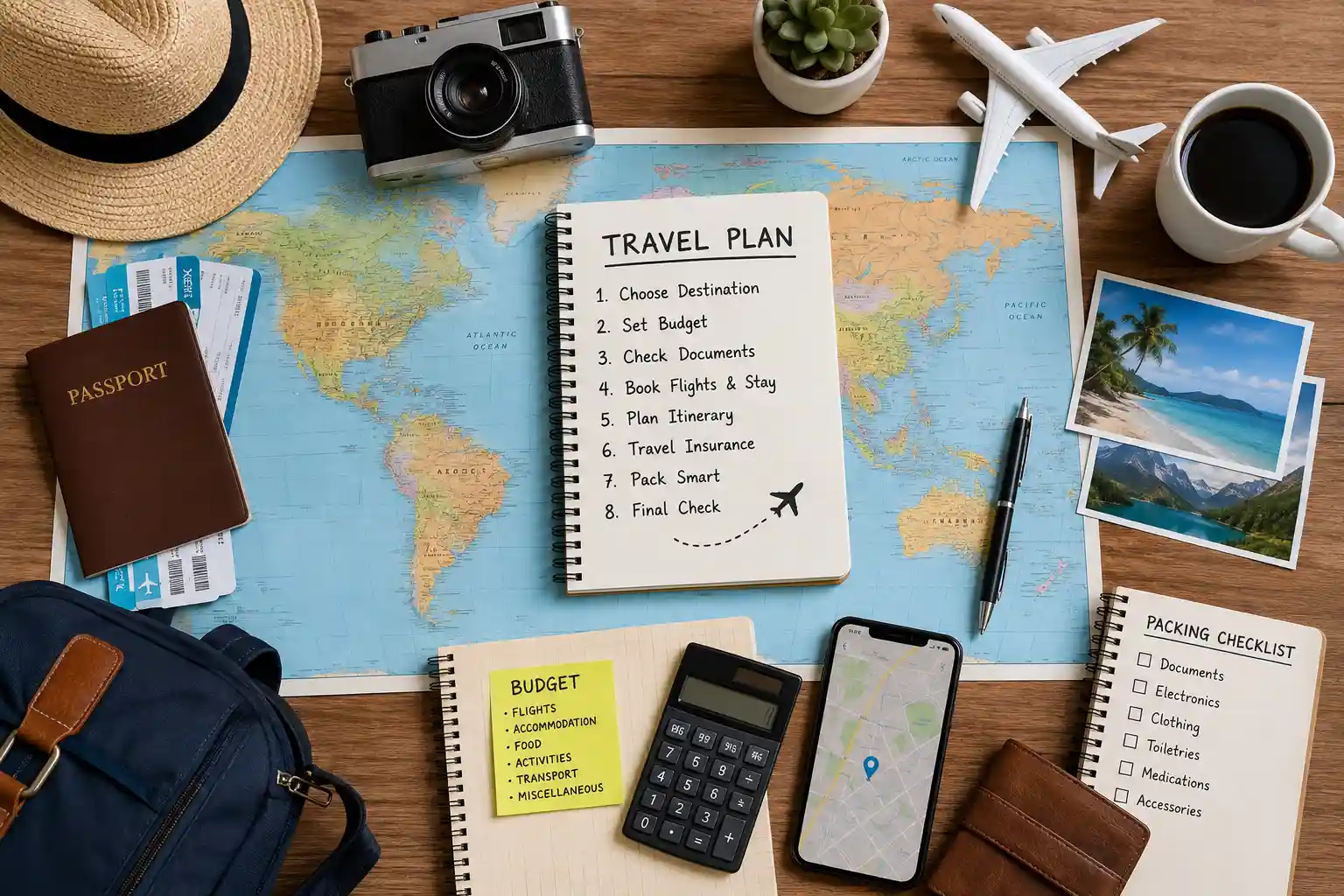




Every great journey begins with inspiration, but turning a vague desire into an actionable plan requires focus. Before you book flights or research in advance for popular sightseeing spots, you must determine what kind of trip best suits your budget, timing, and travel preferences.
Step 1: Define Your Travel Style and Choose a Destination
Identify what you want out of your next trip. Ask yourself what type of experience you need right now:
- Relaxation: Spending quiet days at beach resorts, vacation rentals, or countryside retreats.
- Adventure & Exploration: Hiking national parks, taking a scenic road trip, or trying sports activities.
- Cultural Immersion: Visiting historical landmarks, trying local food, and exploring city centers.
- Independent Travel vs. Tour Packages: Deciding whether you prefer total flexibility or pre-arranged guided itineraries.
Understanding your travel style helps narrow down hundreds of potential destinations to a shortlist that fits your goals.
Solo Travel vs. Group Vacations
If you are planning a solo travel experience, you have full control over your schedule, budget, and daily activities. However, solo travel requires additional emphasis on safety, local research, and choosing a secure place to stay.
On the other hand, if you are traveling with family or friends, gather input early regarding budgets, interests, and dietary preferences to keep everyone aligned throughout the planning trips process.
Step 2: Establish a Travel Budget Early
Setting a realistic budget is the most critical factor when learning how to plan a trip from scratch. Knowing your total budget beforehand prevents financial stress and helps you make smart choices when booking flights, hotels, and tours.
The Core Components of a Travel Budget
To build an accurate budget, break your expenses down into these categories:
- Transportation: Long-haul flights, airport trains, rental car fees, fuel, or local public transit.
- Accommodation: Hotels, resorts, airbnb options, or budget hostels.
- Food & Dining: Fine dining, casual street food, and grocery runs.
- Activities & Tours: Entry tickets, museum passes, and bookings through platforms like GetYourGuide.
- Miscellaneous & Emergencies: Travel insurance, local SIM cards, daily tips, and souvenir shopping.
Estimated Cost Breakdown Comparison
| Cost Category | Budget Traveler | Mid-Range Traveler | Luxury Traveler |
|---|---|---|---|
| Accommodation | Hostels / Shared Airbnb | 3-Star Hotel / Private Airbnb | 5-Star Hotel / Luxury Resort |
| Daily Dining | Street Food & Groceries | Local Cafes & Casual Restaurants | High-End & Fine Dining |
| Transportation | Buses, Trains & Walking | Taxis, Trains & Rental Car | Private Transfers & Chauffeurs |
| Activities | Free Attractions & Parks | Self-Guided & Mid-Tier Tours | Private Guided Experiences |
| Buffer Fund | 10% of Total Budget | 15% of Total Budget | 20% of Total Budget |
Step 3: Check Travel Documents and Official Advisories
Before finalizing your flights or committing to non-refundable hotel deposits, ensure your documentation is fully verified and up to date.
- Passport Validity: Many countries require your passport to be valid for at least 6 months beyond your scheduled departure date.
- Need a Visa: Verify whether your destination offers visa-free entry, visa-on-arrival, or requires an advance electronic visa (e-Visa). Apply for a visa well in advance to avoid delays.
- Vaccinations & Medical Clearance: Confirm if specific health certificates or routine immunizations are required for entry.
Official Government Travel Advisory
For official guidance on passport rules, country-specific entry requirements, and international safety guidelines, consult official government advisories. Checking official resources helps you navigate destination rules with complete confidence.
Step 4: Book Flights and Secure Your Accommodation
With your destination and budget confirmed, move on to securing your major transit and lodging reservations.
How to Book Flights Efficiently
- Use Search Engines: Monitor routes using flight aggregators like Google Flights, Skyscanner, or Kayak to compare prices across multiple airlines.
- Be Flexible with Dates: Shifting your departure date by just two or three days can yield significantly lower fares.
- Watch Out for Hidden Fees: Pay close attention to luggage allowances, seat selection fees, and airport transfer costs when comparing options.
When finalizing flight tickets, always double-check airport codes, baggage policy allowances, and layover durations before clicking the payment button.
Choosing the Right Place to Stay
Where you stay significantly impacts your overall trip experience:
- Hotels & Resorts: Ideal for travelers seeking convenience, daily housekeeping, and central locations.
- Airbnb & Vacation Rentals: Perfect for long trips, families, or travelers who prefer cooking their own meals.
- Hostels & Guesthouses: Recommended for solo travelers and budget-conscious adventurers looking to connect with other travelers.
Step 5: Build a Flexible Daily Itinerary
Creating a balanced travel itinerary is about striking a healthy middle ground between over-scheduling and being overly spontaneous. Planning every single hour leads to burnout, while leaving everything unplanned can result in missed sights and wasted time.
How to Group Attractions Regionally
- Make a List: Draft a master list of every museum, landmark, park, and local restaurant you want to visit.
- Map It Out: Plot your saved points of interest directly on Google Maps.
- Cluster by District: Group attractions that are within walking distance or along the same transit lines into single morning or afternoon sessions.
- Pre-Booking Popular Spots: For famous museums or popular tourist attractions, arrange tickets ahead of time to skip long lines.
Step 6: Buy Travel Insurance for Total Peace of Mind
Travel insurance is an essential safety net for both short vacations and extended long trips. Unexpected travel disruptions, flight cancellations, lost luggage, or medical emergencies can turn a vacation into an expensive ordeal without proper coverage.
- Trip Cancellation & Interruption: Reimburses pre-paid expenses if you must cancel due to unforeseen circumstances.
- Emergency Medical Coverage: Covers hospital stays, doctor visits, and emergency transportation abroad.
- Baggage Protection: Covers financial loss if your luggage is delayed, lost, or damaged by an airline.
- 24/7 Assistance: Ensures you have continuous phone or chat support during travel emergencies.
Step 7: Packing for a Trip Like a Pro
Packing smartly reduces physical strain and eliminates hassle at airport terminals. Packing light keeps you mobile and organized.
Ultimate Travel Packing Checklist
1. Documents & Essentials
- Passport & ID (digital + physical copies)
- Visa approval letters & permits
- Boarding passes & hotel vouchers
- Cards, local cash, travel insurance policy
2. Gear & Electronics
- Smartphone & charger cables
- Universal power adapter & power bank
- Noise-canceling headphones
3. Clothing & Footwear
- Versatile layered clothing
- Comfortable broken-in walking shoes
- Rain jacket or weather outerwear
4. Toiletries & Health
- Travel-sized toiletries & sunscreen
- Prescription medicines with doctor scripts
- First-aid kit (pain relievers, band-aids)
Step 8: Final Pre-Departure Steps
With a few days remaining before your departure date, complete these final preparations for a seamless transition:
- Inform Your Bank: Set a travel notice on your credit/debit cards so foreign transactions are not flagged.
- Confirm Pre-Booking Items: Double-check flight times, hotel reservations, airport transfer pick-ups, and rental car details.
- Organize Luggage: Weigh your luggage before heading to the airport to ensure compliance with airline limits.
- Download Offline Maps: Save your destination region on Google Maps to navigate offline without cellular data.
Conclusion: Start Planning Your Next Trip Today
Learning how to plan a trip from scratch does not need to feel complicated or stressful. By following a structured step-by-step process—setting a realistic budget, securing travel documents early, booking flights and lodging strategically, and building a flexible itinerary—you set the foundation for a seamless vacation.
Whether you are embarking on a solo travel adventure across new cultures or planning a relaxing road trip with family, early preparation guarantees peace of mind every step of the way. Start researching destinations today, build your master checklist, and enjoy the journey!